Principal Product Designer. I design complex B2B products and design systems with an AI-native workflow (Claude Code + Figma MCP), and I build the tools I'm missing. This site is my portfolio, documented like a design system.
Madrid · Remote or hybrid5 years in B2B productSpanish native · English professional
For a team building product with AI, integration is straightforward:
team.tsxtsx
import { Diego } from'unocomacero'<Diego
role="Principal Product Designer"
stack={['Figma', 'Claude Code', 'Figma MCP']}
focus={['complex B2B', 'design systems']}
// Works best with clear direction and autonomy/>
Get started / Working with me
Working with me
Like any component, I have use cases where I shine and others I'm not designed for. Better to know up front.
Do's and don'ts
✓ Use me for
Complex products with regulation and expert users
Teams that want to design and build with AI for real
Design systems that need to be tidied up or kept alive
Bridging design and engineering
✕ Don't use me for
Micromanaging the process: check deadlines and quality, not the how
Half-hearted commitments or decisions that never get made
Designing without ever talking to engineering
Recommended environment
Property
Recommended value
direction
Clear: defined goals and fast execution
trust
High, with autonomy
stage
Startups and scale-ups, especially AI-native products
location
Remote, or hybrid in Madrid
Foundations / Principles
Principles
The base rules of this system. I came to design from the workshop (I used to be a car-body repairer and airbrush artist), and that's where most of this comes from.
The four principles
01
Analyse properly, then move fast
I understand the problem before opening Figma. Then I commit, no half measures.
02
Organise complexity without hiding it
Expert users need the detail. My job is to make what's urgent show up first.
03
A system that's genuinely shared
Tokens and components that design and engineering use the same way, and that can be checked.
04
If there's friction, I build the tool
A prototype that works is more convincing than any deck.
Foundations / Tokens
Tokens
This site is built on tokens. You choose the primitives (accent, neutrals, radius, type, density and mode) and the system recalculates the semantic tokens the interface uses.
Semantic tokens in use
--bg
--surface
--ink
--muted
--accent
--on-accent
--card-1
--card-2
System rules
Rule
Behaviour
neutral-accent
A black accent turns cream in dark mode
dark-visibility
A coloured accent lightens in dark mode if it falls below 3:1 on the background
on-accent
Text on the accent (white or black) is picked for the highest contrast
contrast-guard
If the accent fails AA, the panel flags it and offers to fix it
Components · Product / Utility software suite
Software suite for electricity distributors
A product suite for Spanish electricity distributors covering the full cycle, from the smart meter to the bill and the customer. I designed four of its products and contributed to a fifth.
In productionB2B productB2C portalDesign SystemEnergy
The suite
Products sharing one design system, for very different users: technicians, metering teams, regulatory back office, analysts and end customers. Follow the data path and select a product to see what it receives and delivers.
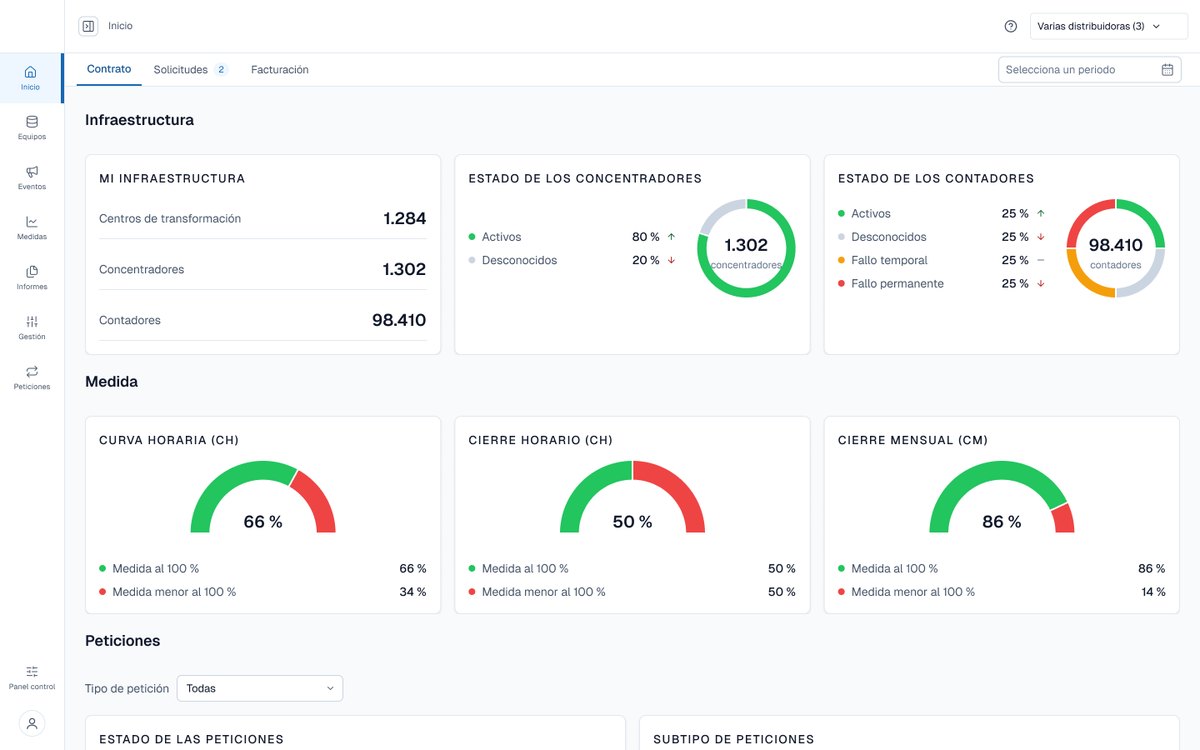
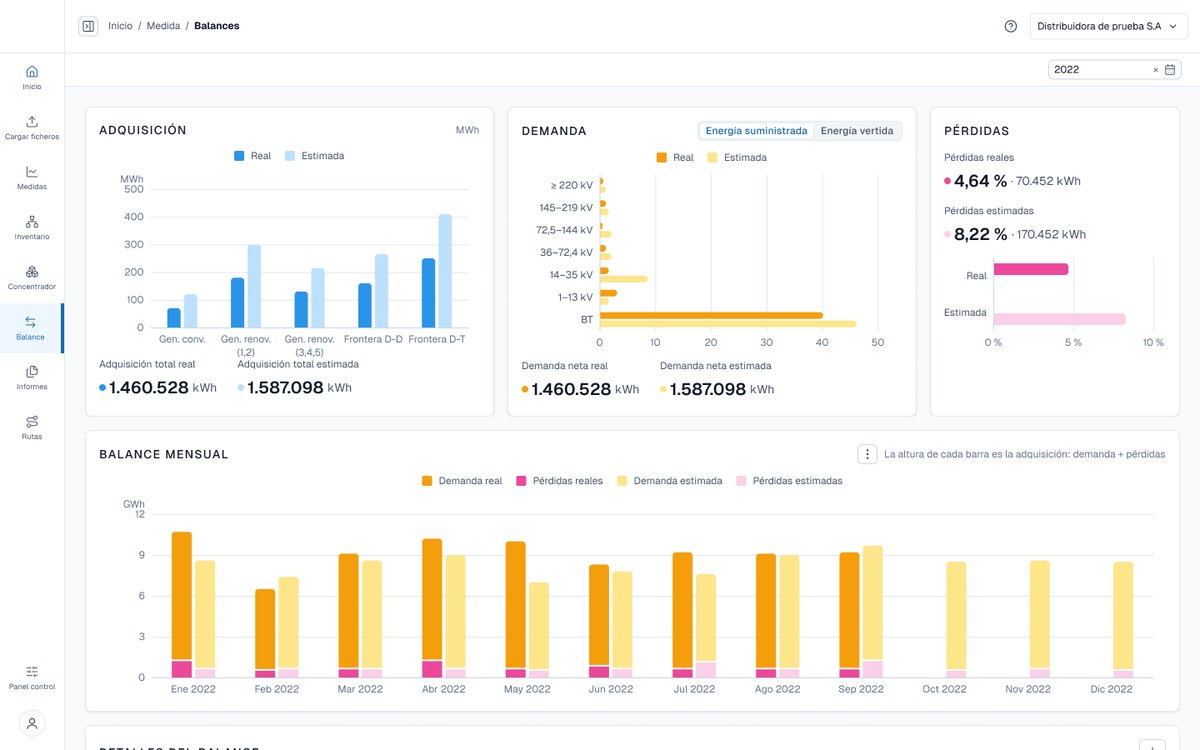
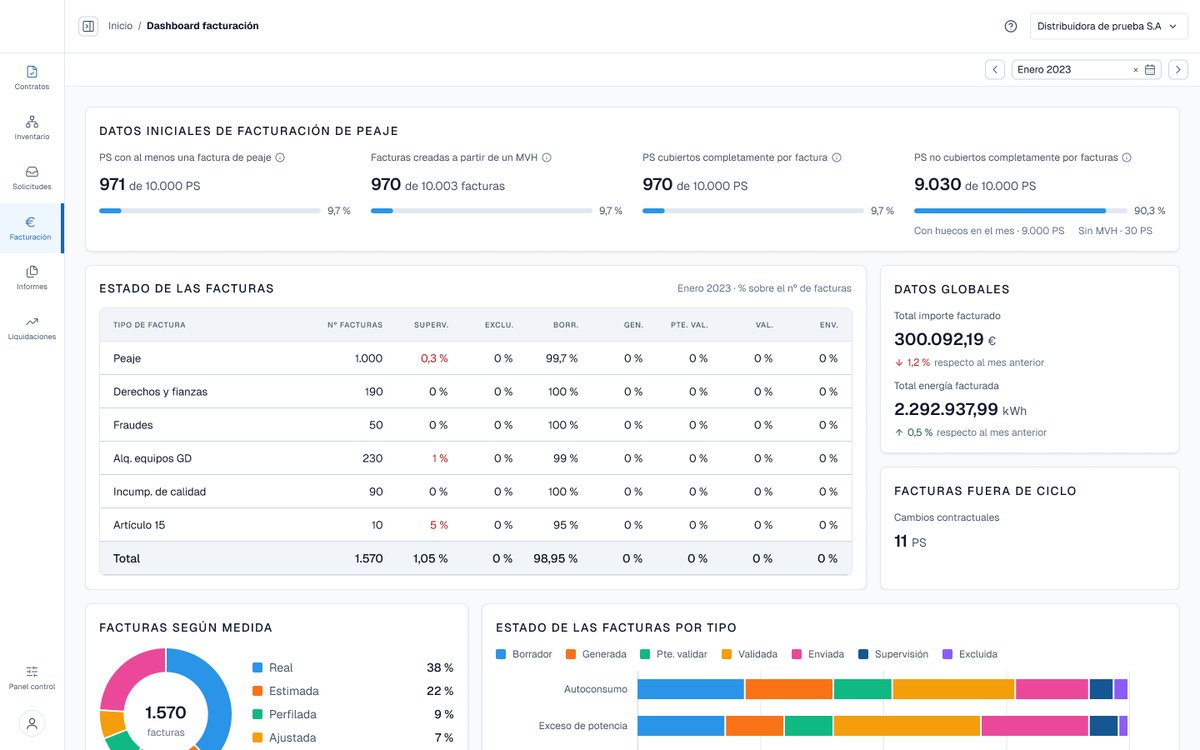
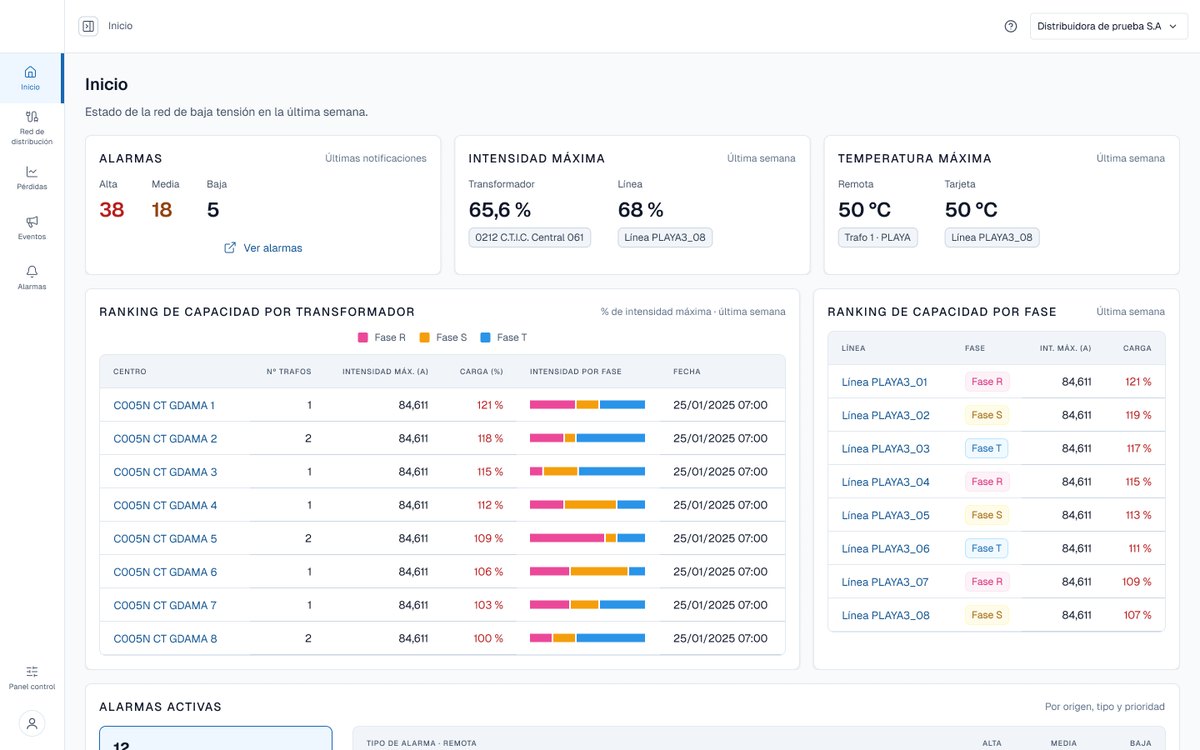
Each product does a different job, but they all share the header, navigation, cards, tables, colours and chart style. Moving from one to another doesn’t mean learning a new interface.
Home dashboards adapted to the design system. Sample data, interface in Spanish.
Props
Prop
Value
role
Principal Product Designer (Product Designer 2021–2025)
company
Sercide · Madrid
period
2021 — present
scale
170+ distributors · 500,000+ supply points
products
Remote metering, measure management, contracting and billing, and the customer portal (B2C); contributed to low-voltage analytics
process
Scrum · research, definition, code prototyping and specs
tools
Figma · Claude Code · Figma MCP · Jira
3 min read
Context
Electricity distributors manage supply points, metering, billing and regulatory reporting through processes with deadlines set by regulation. Many were working with siloed, rigid tools that relied heavily on manual work.
It is the suite Sercide uses to bring those processes together in a modern, connected environment, built to adapt to new business needs and regulatory change.
The challenge
Expert users, dense information and zero room for ambiguity: a missed deadline or a misclassified request has real consequences.
Surface what's urgent without hiding the detail experts need
Keep modules that grow in parallel consistent with each other
Design for very different users, from field technicians to end customers
Reduce drift between what gets designed and what gets built
My role
I designed four of its products (remote metering, measure management, contracting and billing, and the customer portal) and contributed to low-voltage analytics, within a Scrum team. I also lead the consistency of the design system they share. I cover the full process:
01Research & define
Understand processes, regulation and needs with the business and users.
02Design & prototype
Flows and screens in Figma, plus code prototypes built with Claude Code.
03Specify
Dev specs grounded in a shared design system.
Design decisions
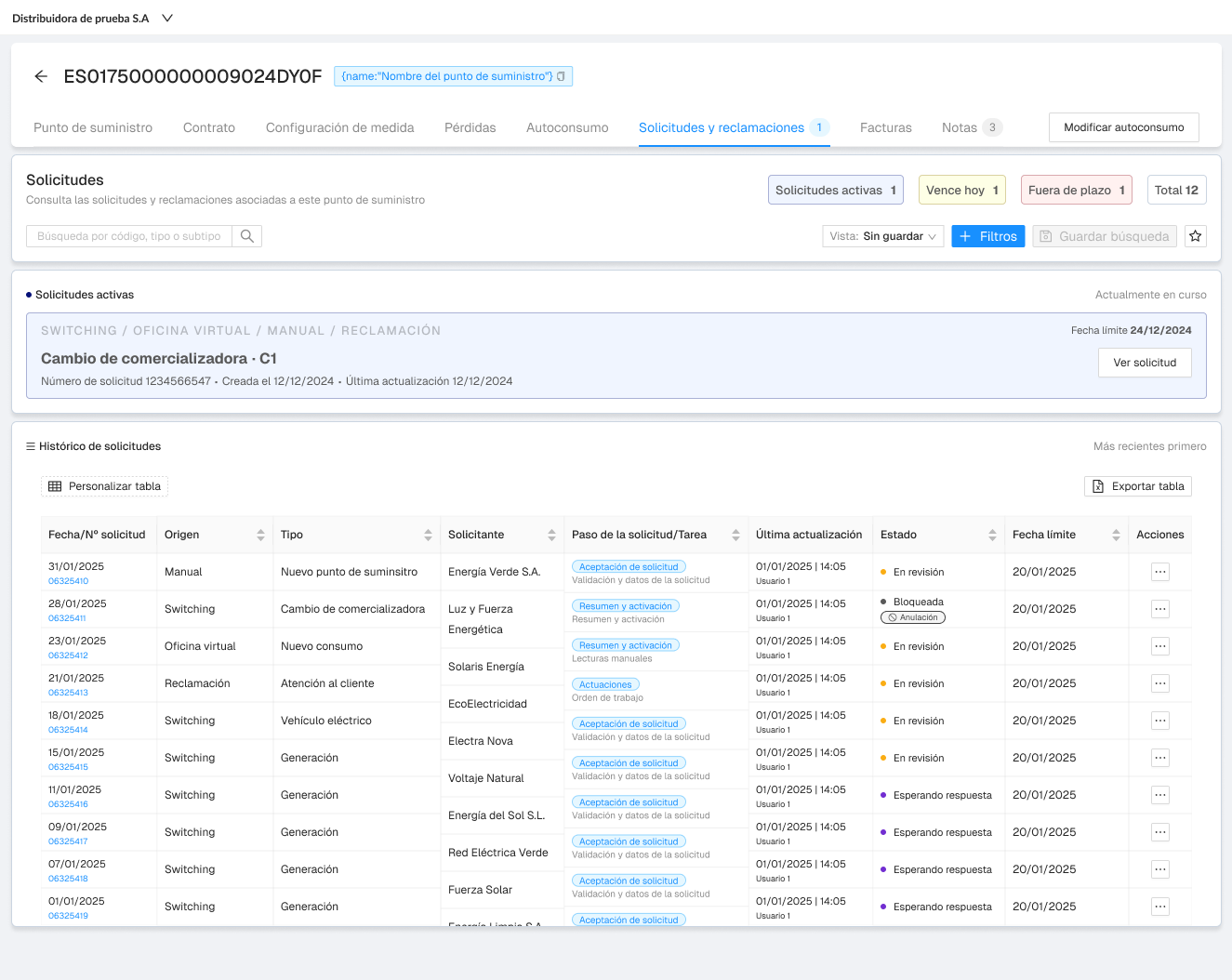
The requests screen, shown in the overview preview, sums up the approach:
Deadlines first. "Due today" and "Overdue" counters in the header, before any table.
Active separate from history. The open request stands out with its origin (switching, customer portal, manual, claim) and its due date.
Expert tooling. Search, filters, saved views, a customisable table and export.
Traceability. Current step, last update and status of every request at a glance.
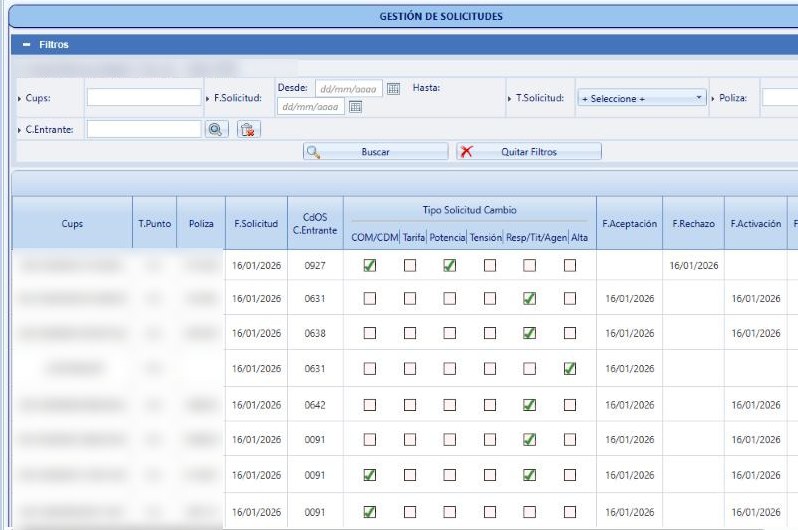
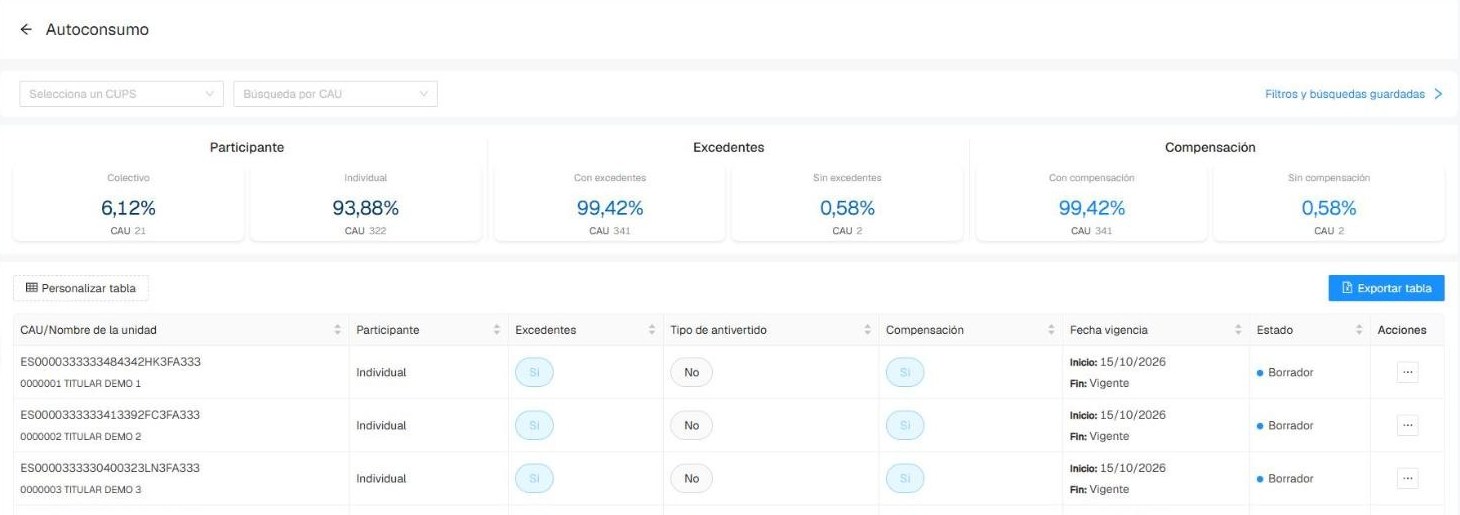
This is how the same request management looked in the previous tool:
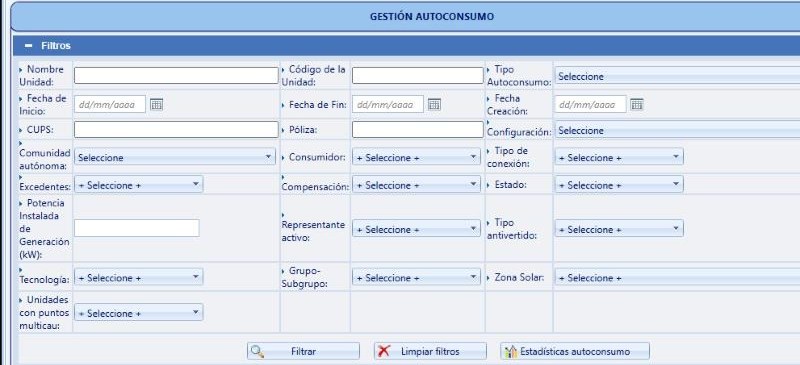
In the previous tool, self-consumption was an inventory record, separate from the requests. Units were created by hand or through bulk uploads, with no check against the regulatory rules, and a unit was marked as cancelled by typing “(BAJA)” into its name.
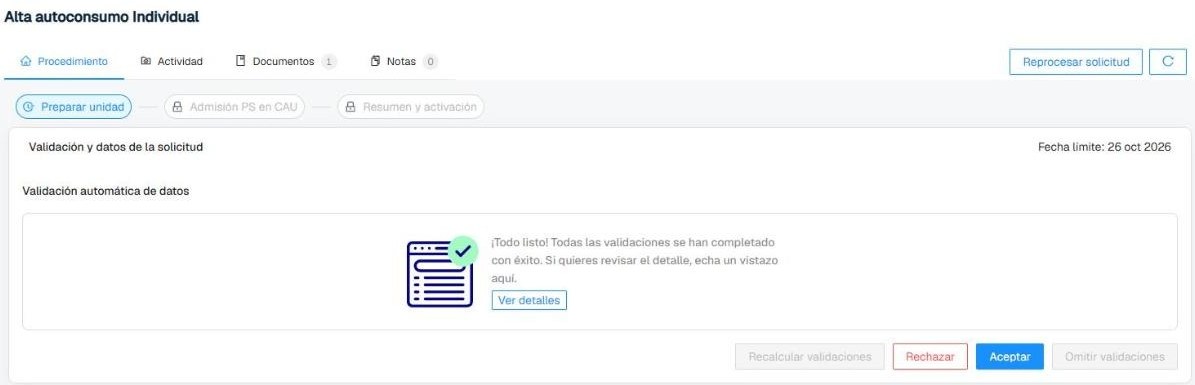
The problem wasn’t finding the units, it was getting them in right. So in the suite, a self-consumption unit is born from the request: it is created and validated while the request is processed, and the list is there to check the result.
Steps instead of a form. Prepare the unit, admit each supply point and activate, with the deadline always in view.
Regulation built into the design. Automatic validation checks the request before a decision, and when completing the unit you can’t register combinations the regulation doesn’t allow: for example, compensation without surplus, or on installations above 100 kW.
Real statuses. In progress, active and cancelled with an end date, instead of a word in the name.
A summary that filters. Cards by participant type, surplus and compensation that filter the list when clicked.
−56%self-consumption support tickets between 2022 and 2025
1 in 14support tickets was about self-consumption in 2025, down from 1 in 8 in 2022
The new flow shipped in 2023, while self-consumption was booming in Spain: more installations than ever, and fewer tickets.
This is a team result, not an individual one: I designed the flow; the figures cover support for the whole suite.
The customer portal
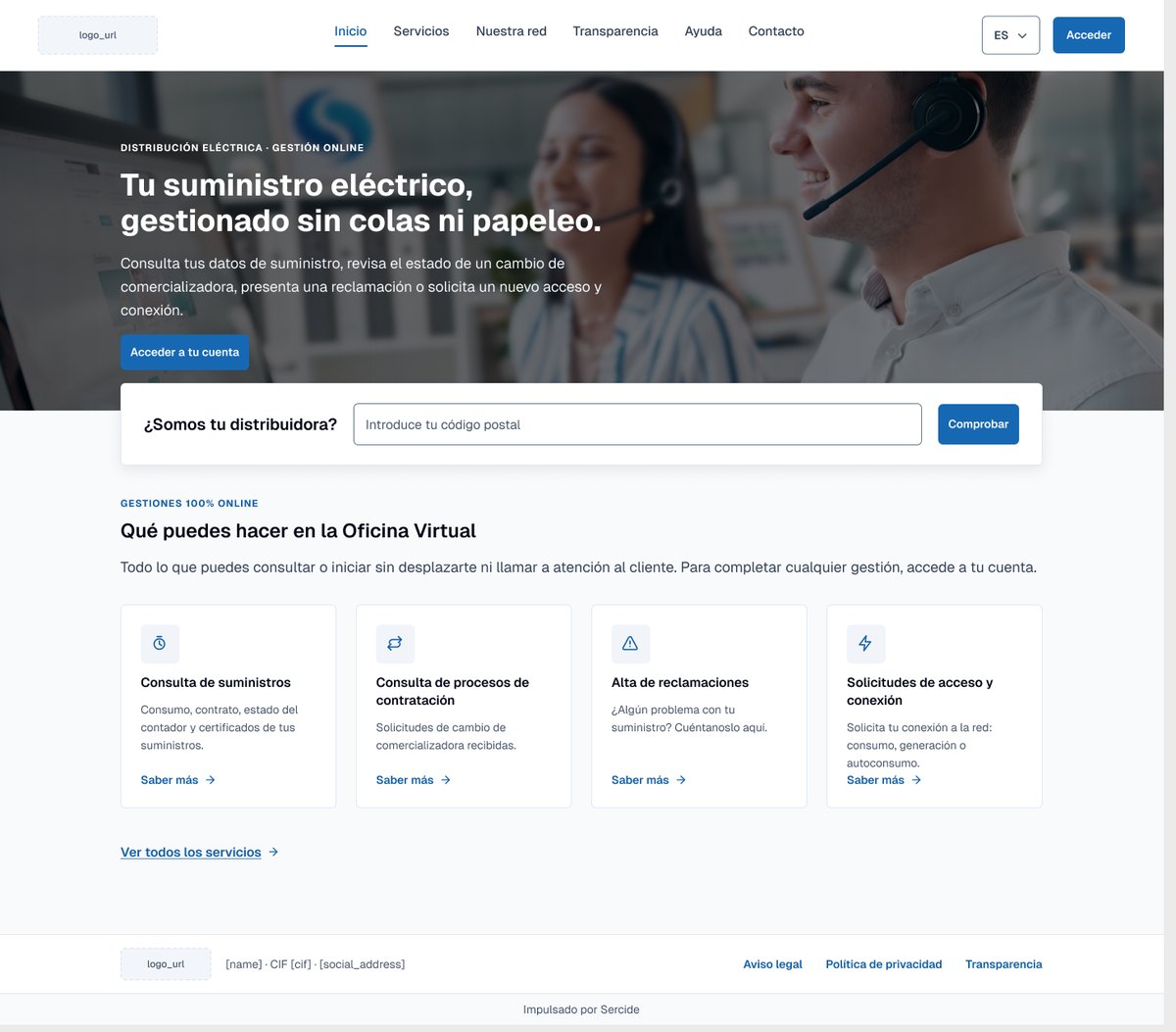
The public side of the portal is the distributor’s face to anyone, not just its customers. The challenge was turning regulated processes into language people understand without knowing the regulation.
White label. One design serves every distributor: each adds its own logo, details and legal texts.
Start with the real question. Many people don’t know who their distributor is, so the first thing is a postcode search.
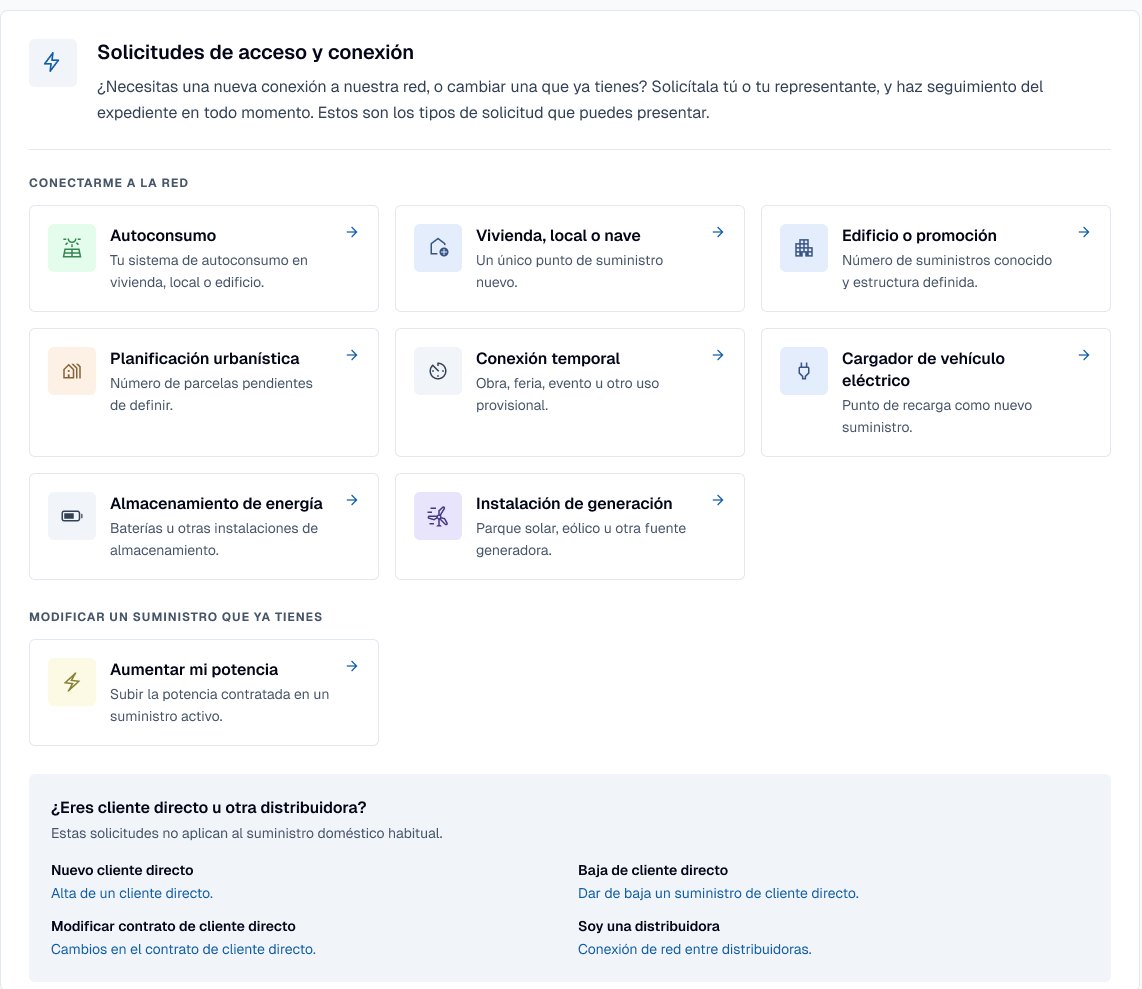
Processes explained through examples. Grid access and connection requests are organised by what you want to do: self-consumption, a new home, an electric-car charger…
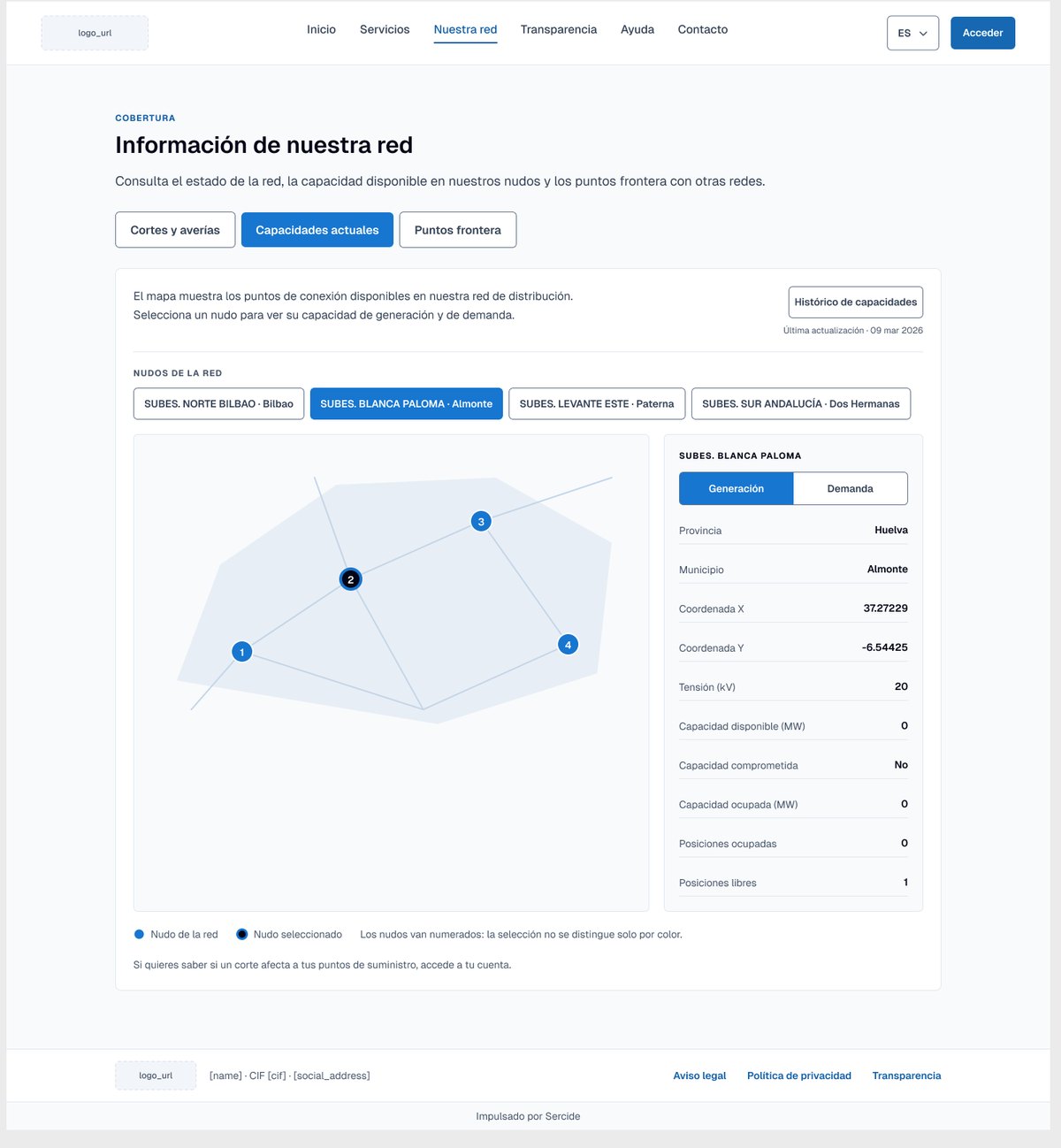
Accessible on the map too. On the network map, nodes are numbered and have a text alternative: selection doesn’t rely on colour alone.
To keep design and code from drifting apart, I work with an AI-native workflow (Claude Code + Figma MCP and Figma AI) from research through to specs, and I lead AI-assisted component documentation.
Outcome
170+electricity distributors use the suite
500,000+supply points managed
Distributors that had moved to competitors have come back.
Requests and processes that used to be manual are now automated.
Self-consumption processes, previously manual, are now standardised, and their support tickets are down 56% since 2022.
Better usability and traceability, and less operational friction.
Team-wide, the AI design workflow has cut time per stage by 30–60% and greatly reduced drift between design and engineering.
These are suite and team results, not individual ones: my contribution is the design of four of its products.
Some details are omitted for confidentiality. Screenshots use sample data.
Components · Product / AI workflow
An AI-native design workflow
Claude Code + Figma MCP and Figma AI across every stage, from research to specs. I lead it within Sercide's product team.
Team result: −30–60% per stageAI-native
Stages
workflow · claude code · figma mcp
01
Researchsynthesis of insights
AI-assisted
02
Definitionrequirements and flows
AI-assisted
03
Designon top of the design system
AI-assisted
04
Code prototypevalidate in hours, not weeks
AI-assisted
05
Dev specsclosed, no ambiguity
AI-assisted
The 30–60% is a team result after adopting the workflow, not an individual metric.
Components · Tools / DS Generator
DS Generator
Living design-system documentation in the spirit of zeroheight or Storybook, but aligned with Figma and checked against the repository. Yes, a bit like this site.
In productionMy idea and pilotClaude Code
Preview
ds-generator · demo
JavaScript is needed to view the interactive demo.
Interactive recreation with sample data. Try turning on the check and changing the tokens in "Customise".
Props
Prop
Value
origin
My own idea
pilot
Designed, prototyped and built by me with Claude Code
production
Taken to production by the engineering team
usedBy
Design · Engineering · Product
2 min read
The problem
A design system isn't just components. It's also the decisions about when to use them and when not to. When those decisions aren't written down in a shared place, every team reads them differently, and what's in Figma drifts away from what's in code.
The idea
A design-system documentation hub in the spirit of zeroheight or Storybook, but connected to the two real sources: components designed in Figma and code in GitHub.
Do's and don'ts. Every component documents what it's for and what it isn't for.
Aligned with Figma. Documentation starts from the designed components.
Checked against the repository. What's built is verified against what's designed.
One shared place for design, engineering and product.
From pilot to production
Instead of pitching the idea with a mockup, I built a working pilot, covering the design, prototyping and initial development, with Claude Code.
01Idea
I spot the need and propose the tool.
02Pilot
I design, prototype and build the first working version.
03Buy-in
I present it to the teams and they decide to back it.
04Production
Engineering rebuilds it in code in a controlled way.
Impact
It's now used by design, engineering and product to make and structure design decisions: when a question comes up, the answer lives on the component page, not in someone's head.
What I took away
A prototype that works is more convincing than any deck. Being able to build it myself with Claude Code let me validate the idea with the real thing, and leave engineering to do what it does best: take it to production to its own standards.
Components · Tools / Invoicing app
Invoicing app
My tool for running my freelance business, built with Claude Code.
In useVeriFactu in testing
Props
Prop
Value
features
PDF invoices and proformas · clients · expenses
tax
Generates the Spanish quarterly VAT return file (Modelo 303) in the Tax Agency's format
stack
Claude Code · Supabase
visibility
Internal use
The VeriFactu e-invoicing integration is in testing, not in production.
Patterns / Projects with purpose
Projects with purpose
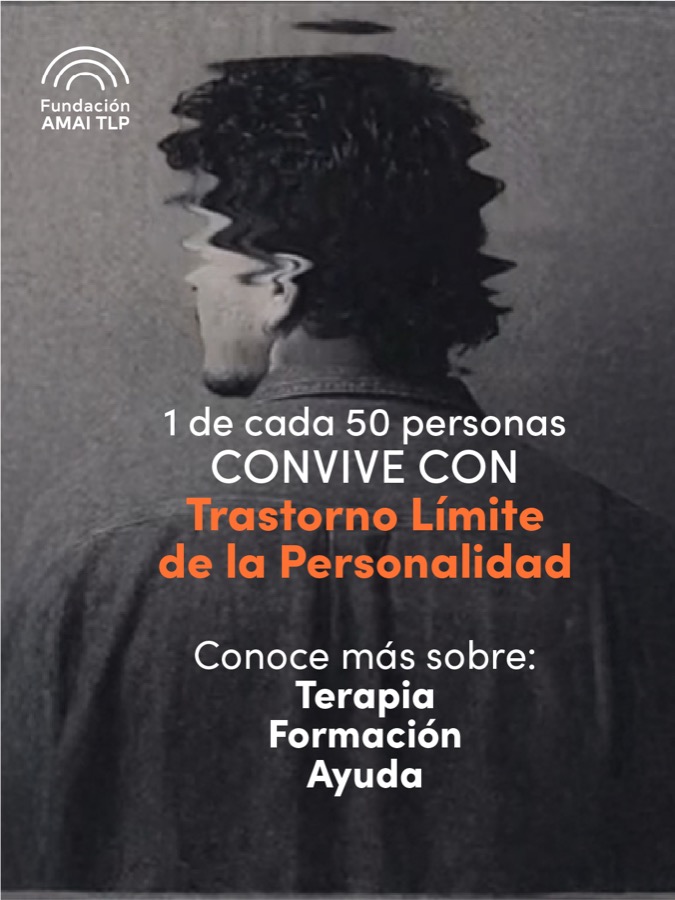
A pattern I repeat through my studio, Unocomacero: web, brand identity and UX for NGOs and social-impact initiatives.
Projects
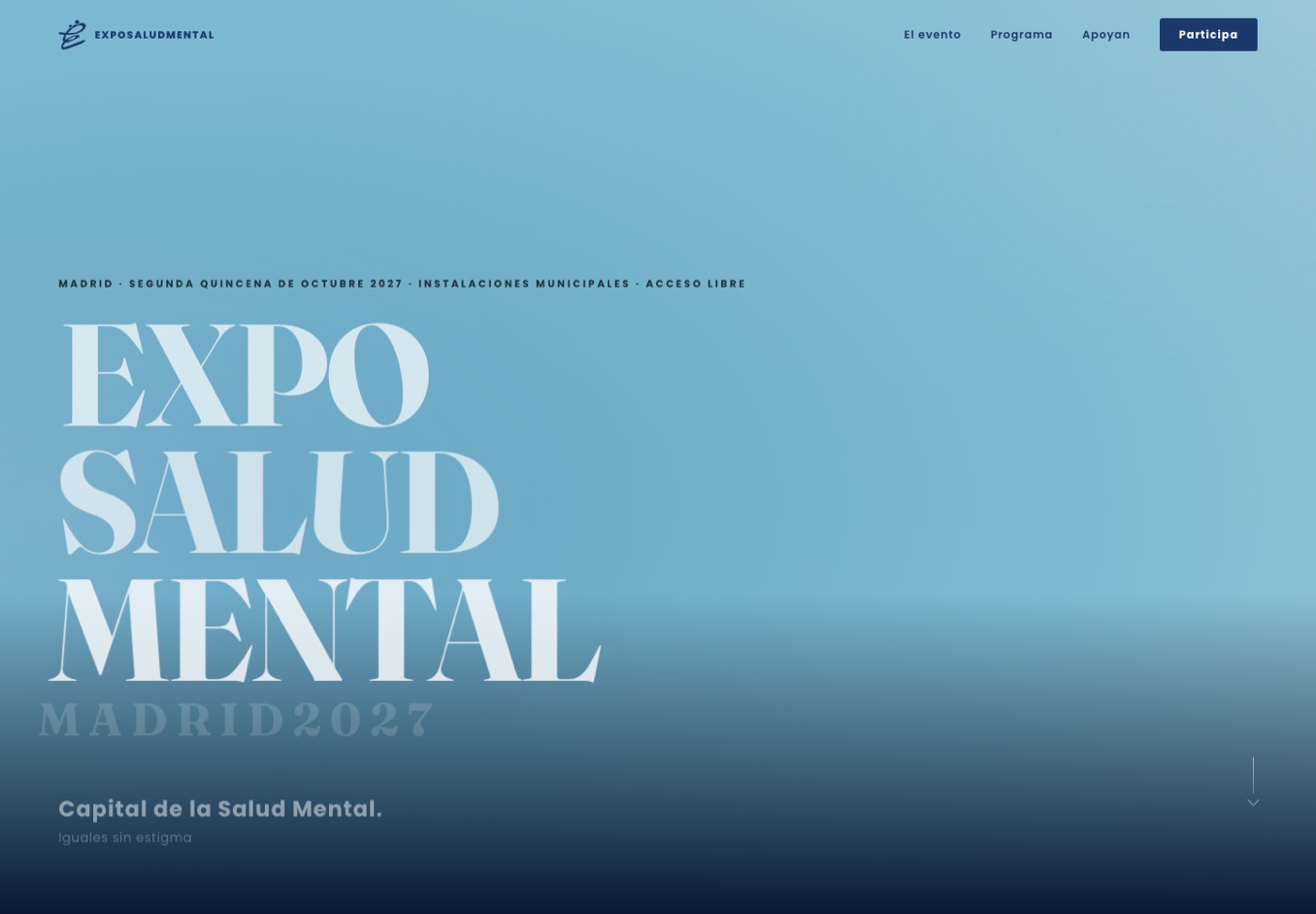
Expo Salud Mental Madrid 2027
Strategy, copy, design and front-end of the landing page: person-first language and AA contrast.